
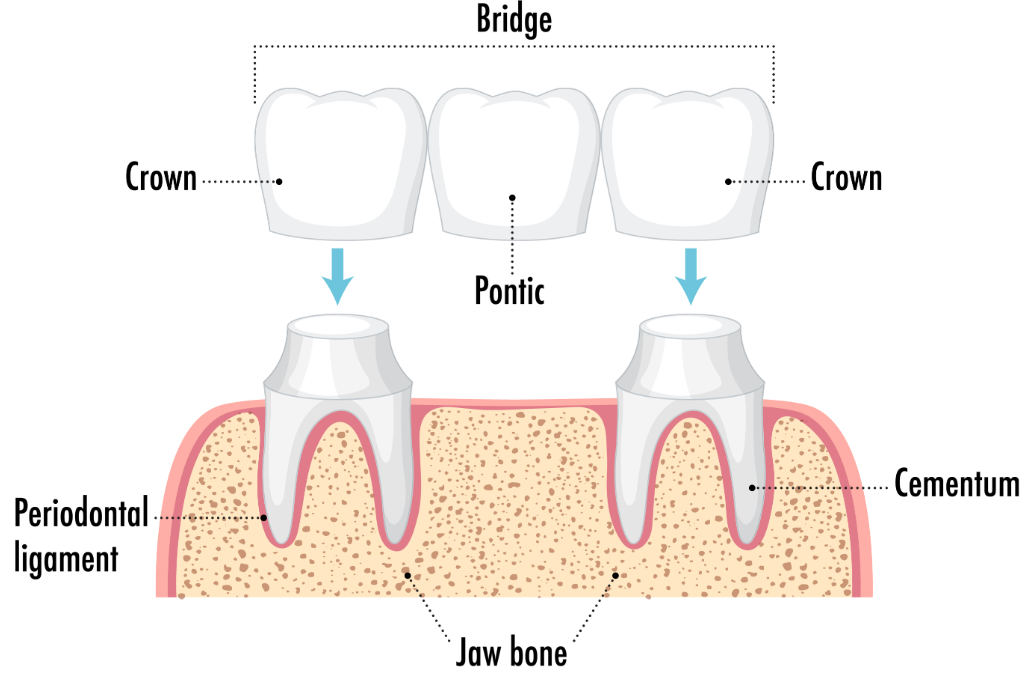
What Are Dental Bridges?
Dental bridges are a common way to replace missing teeth. They fill the gap where one or more teeth are missing. Usually, a dental bridge uses the teeth on either side of the gap for support. These teeth hold the bridge in place. As a result, you can chew and speak more easily. According to the American Dental Association, dental bridges help keep your smile healthy and strong.
Types of Dental Bridges
There are several types of dental bridges. Each type works best for different needs. Below are the main types of dental bridges:
Because each type has its own benefits, your dentist will help you choose the best one for your needs.
Benefits of Dental Bridges
Dental bridges offer many benefits. For example, they can:
In addition, dental bridges can prevent other teeth from shifting out of place. This helps protect your bite and jaw health.
What to Expect During the Procedure
The dental bridge procedure usually takes two visits. First, your dentist will prepare the teeth next to the gap. They may shape these teeth to fit the crowns. Then, your dentist will take a mold of your mouth. This mold helps create a custom bridge. While you wait for your permanent bridge, you may get a temporary one. At your next visit, the dentist will fit and adjust your new bridge. Once it fits well, the bridge is cemented in place. Most people feel little pain during the process. However, your dentist will make sure you are comfortable at every step.
Aftercare and Maintenance Tips
Proper care helps your dental bridge last longer. Here are some aftercare tips:
With good care, dental bridges can last many years. Your dentist can show you the best ways to keep your bridge clean and healthy.
Potential Risks and Considerations
Although dental bridges are safe, there are some risks. For instance, the teeth supporting the bridge may become sensitive. Sometimes, decay can form under the crowns. In rare cases, the bridge may become loose or break. However, regular dental visits can help catch problems early. If you notice pain, swelling, or the bridge feels loose, contact your dentist right away. Your dentist will discuss all risks before starting the dental bridge procedure.
Frequently Asked Questions
In summary, dental bridges can restore your smile and help you eat and speak with confidence. Consult Dr. Supraja to find out if a dental bridge is right for you.